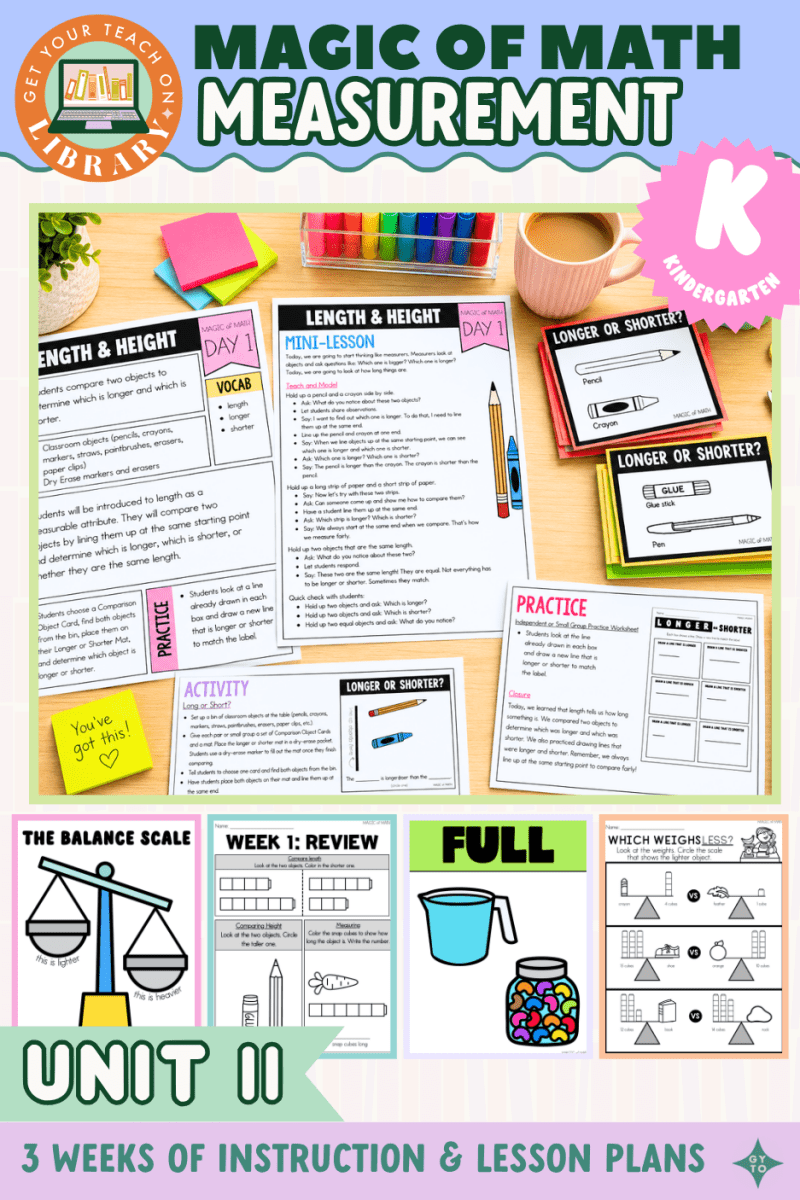
Kindergarten Magic of Math Unit 11: Measurement
Make teaching measurement engaging, hands-on, and developmentally appropriate with this comprehensive Kindergarten Measurement Unit! Designed specifically for young learners, this resource provides everything you need to teach measurement concepts with confidence while saving valuable planning time.
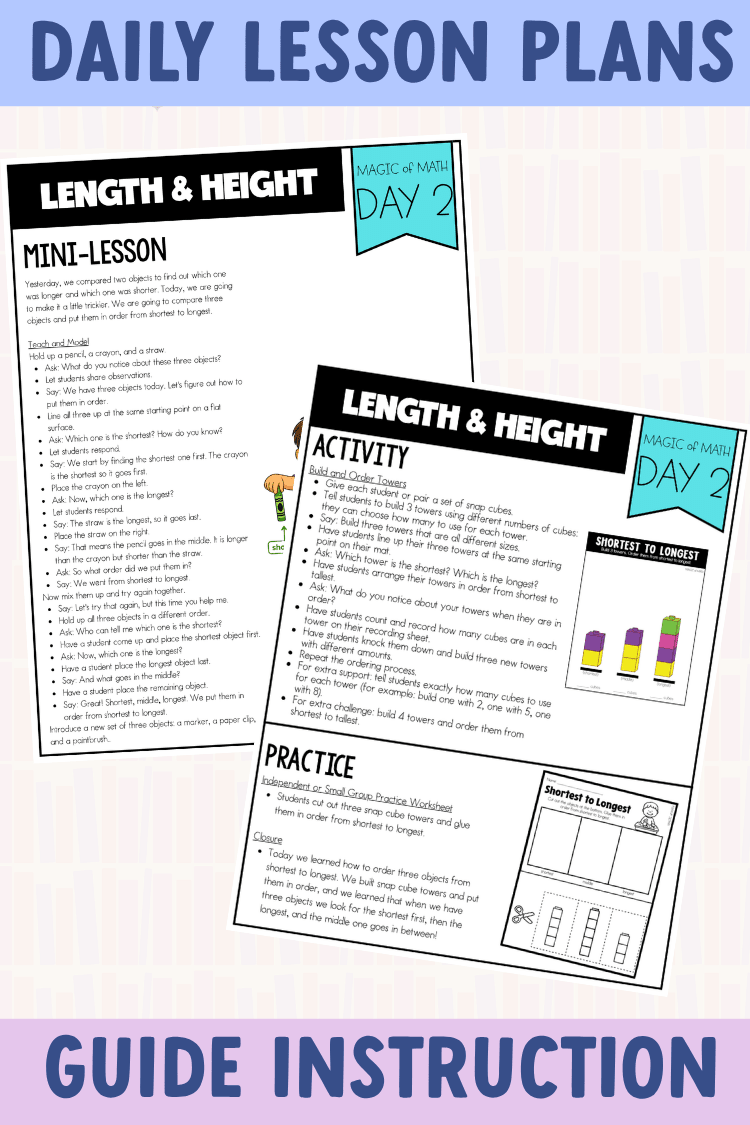
This ready-to-use unit includes 3 weeks of detailed lesson plans, interactive student activities, and math vocabulary support to help students build a strong foundation in measurement skills.
Designed specifically for kindergarten learners, this unit uses concrete experiences, visual models, and meaningful math discussions to help students build confidence with measurement concepts while having fun.
What Students Will Learn
Week 1: Nonstandard Measurement: Length and Height
Kindergarten students will develop foundational measurement skills through the exploration of nonstandard measurement.
- Compare lengths and heights
- Identify longer, shorter, taller, and shorter objects
- Order objects by length and height
- Measure using nonstandard units
- Count units to determine length and height
- Use equal-sized units when measuring
- Estimate length and height
- Record measurement data
- Compare measurement results
- Use measurement vocabulary
- Solve simple measurement problems
- Complete hands-on measurement activities
Week 2: Measuring Weight
Students develop foundational measurement skills by exploring and comparing the weight of objects.
-
Identify objects as heavy or light
- Compare the weight of two objects
-
Use heavier and lighter to describe objects
- Predict which object weighs more or less
- Use a balance scale to compare weight
- Sort objects by weight
-
Order objects from lightest to heaviest
- Measure weight using nonstandard units
- Record and explain weight comparisons using math vocabulary
Week 3: Capacity
Kindergarten students develop foundational mathematical understanding of capacity through hands-on exploration and comparison of volume.
-
Understand and use vocabulary such as full, empty, more, and less
- Compare the capacity of containers using direct comparison
-
Identify which container holds more or less
- Explore and compare liquid capacity through hands-on activities
- Fill and pour to investigate volume concepts
- Sort containers by capacity (least to most / most to least)
- Make simple predictions about capacity
- Use nonstandard language to describe capacity (e.g., “holds more”)
What's Included
✔ Detailed daily lesson plans
✔ Interactive mini-lessons
✔ Hands-on math activities
✔ Shape posters and anchor chart resources
✔ Independent practice pages
✔ Recording sheets and response pages
✔ Real-world measurement connections
✔ Movement-based learning opportunities
✔ Review and reinforcement activities
Why Teachers Love Magic of Math
- Easy-to-follow daily lesson plans
- Low-prep activities and printables
- Engaging, developmentally appropriate instruction
- Strong focus on conceptual understanding
- Hands-on learning that keeps students actively engaged
- Multiple opportunities for practice and review
- Supports whole group, small group, centers, and intervention
Standards Alignment
Common Core State Standards
K.MD.A.1
K.MD.A.2
Texas Essential Knowledge and Skills (TEKS)
K.7A
K.7B
Perfect for classroom teachers, interventionists, homeschool families, and small group instruction, this measurement unit helps students build a deep understanding of length, height, weight, and capacity concepts through meaningful exploration, discussion, and hands-on learning.
Kindergarten Magic of Math Unit 11: Measurement provides everything you need to teach measurement concepts with confidence while helping students develop the mathematical vocabulary, reasoning, and spatial awareness needed for future success.